Creative Campground Sign Ideas to Make Your Sites Stand Out
Share:


Discover creative campground sign ideas to make your sites stand out! Learn tips to boost visibility, attract more visitors, and enhance your outdoor space today.
.png)
Summarize in


10 Creative Campground Sign Ideas for Your Park
Campground signs should help guests find the property, get to their site, locate amenities, and understand important rules without having to ask for directions.
They can also give your park some personality.
If you're replacing old signs or planning signage for a new campground, start with function. Make the important information easy to see and understand. Then think about how the design can reflect the property itself.
Here are 10 campground sign ideas to consider, including examples from campgrounds in the Park With Us community.
What Signs Does a Campground Need?
The exact signage you need depends on the size and layout of your property, but most campgrounds will need some combination of:
- An entrance or welcome sign
- Site number signs
- Directional and wayfinding signs
- Check-in or office signage
- Restroom and shower signs
- Amenity signs
- Speed limit and traffic signs
- Campground rules and safety signage
- After-hours or emergency information
A small 20-site campground may only need a simple system. A larger RV park with cabins, a marina, rentals, or several amenity areas will need more direction.
One useful test is to walk or drive through your campground as though you're visiting for the first time. Anywhere you aren't sure where to go next may need better signage.
1. Make Your Sign Easy to Spot
Guests arriving by car or RV need to recognize your campground before they reach the turn. Keep the name large, use strong contrast, and make sure the sign can be read from the road.
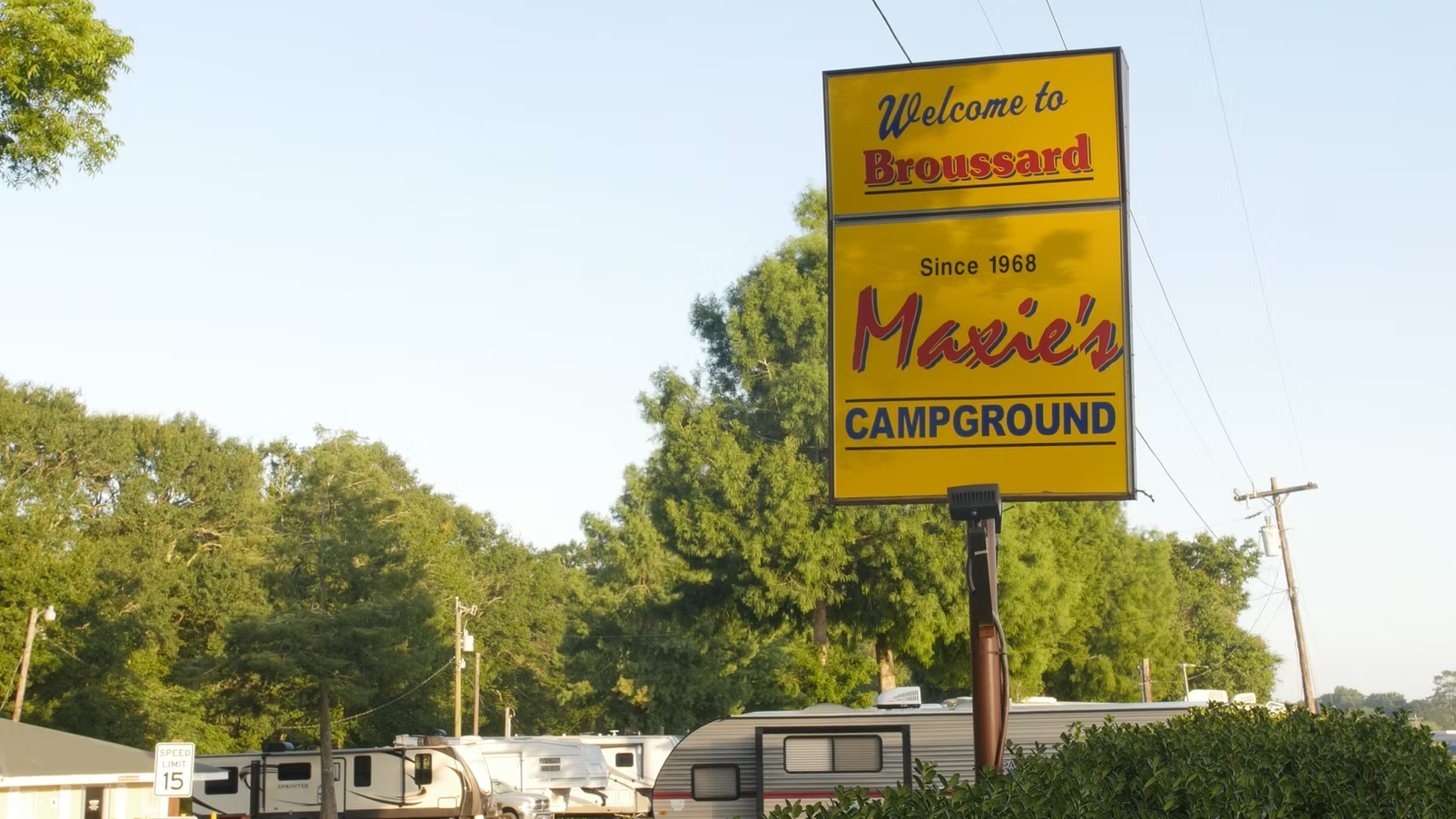
Maxie’s Campground uses a tall roadside sign with a bright yellow background and large, high-contrast lettering. “Maxie’s” is the focal point, while “Campground” is clearly spelled out below it. The sign also includes “Since 1968,” adding a bit of the campground’s history without making the design feel crowded.
It isn’t an elaborate sign, and that’s part of why it works. Drivers can quickly tell they’ve reached Maxie’s, while the distinctive yellow and red design makes the entrance easy to recognize
2. Look at Your Location for Design Ideas
Your surroundings can give you better ideas for campground signs than a catalog of stock outdoor graphics.
Think about what guests associate with your area. It might be local wildlife, a lake, a mountain range, native plants, or something connected to the history of the property.
Those details could influence the illustrations, colors, materials, or shapes you use. They could also inspire names for different loops or sections of the campground.
You don't need to turn every sign into a themed design. A small graphic, color, or type style carried across the property can be enough to make everything feel connected.
3. Keep Sign Number Signs Simple
Guests may be looking for a site number while driving an RV or towing a trailer. They need to recognize it quickly.
Use numbers that are large enough to read from the campground road and place signs where parked vehicles, vegetation, or camping equipment won't easily block them.
Keep the placement consistent too. If Site 12 is marked on a post near the road, Site 13 shouldn't suddenly have a small number attached to a tree.
Parks with different accommodation types can also use site names or numbering to make the layout easier to understand. Tent sites might use a T prefix, while cabins could use names or a separate numbering range.
Whatever system you choose, guests shouldn't need someone at the front desk to explain it.
4. Base Directional Signs on Questions Guests Actually Ask
Your front desk can tell you a lot about where signage is missing.
If guests regularly ask where the bathrooms are, which road leads to their site, where to check in, or how to reach the boat ramp, look at those areas first.
Keep directional signs short and consistent. Use recognizable arrows and the same names guests see on your campground map. If an area is called the "North Loop" on the map, don't label the road "Upper Camp."
Think about driving distance too. Someone towing a trailer needs enough warning to prepare for a turn, especially if turning around isn't easy.
5. Use a Consistent Sign Style for Amenities
Campground amenities aren't always visible from the main road. Clear signage helps guests find what's available instead of stumbling across it later.
Depending on your property, that could include:
- Restrooms and showers
- Laundry
- Camp store
- Dog park
- Pool
- Playground
- Fishing areas
- Trails
- Propane
- Trash and recycling
- Boat ramps or docks
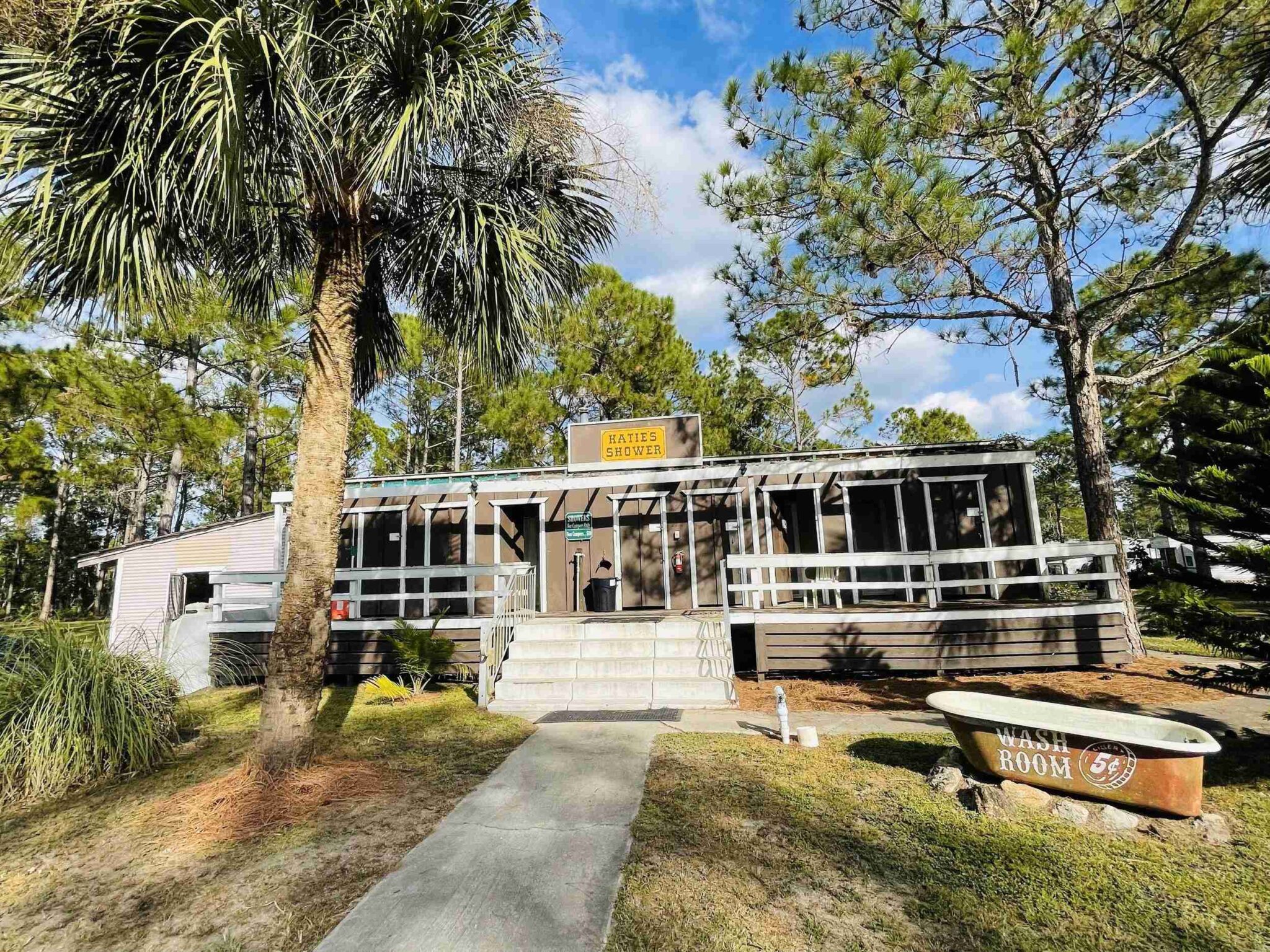
Palm Coast RV Park in Bunnell, Florida, shows why this matters. The Park With Us customer offers laundry and shower facilities, a fishing pond, hiking trails, Wi-Fi, and a solar-lit dog park, among other amenities.
Using the same typeface, icons, materials, or layout for amenity signs also helps guests recognize them quickly as they move around the property.
6. Clearly Mark Different Areas of a Larger Property
Some campgrounds have much more going on than campsites.
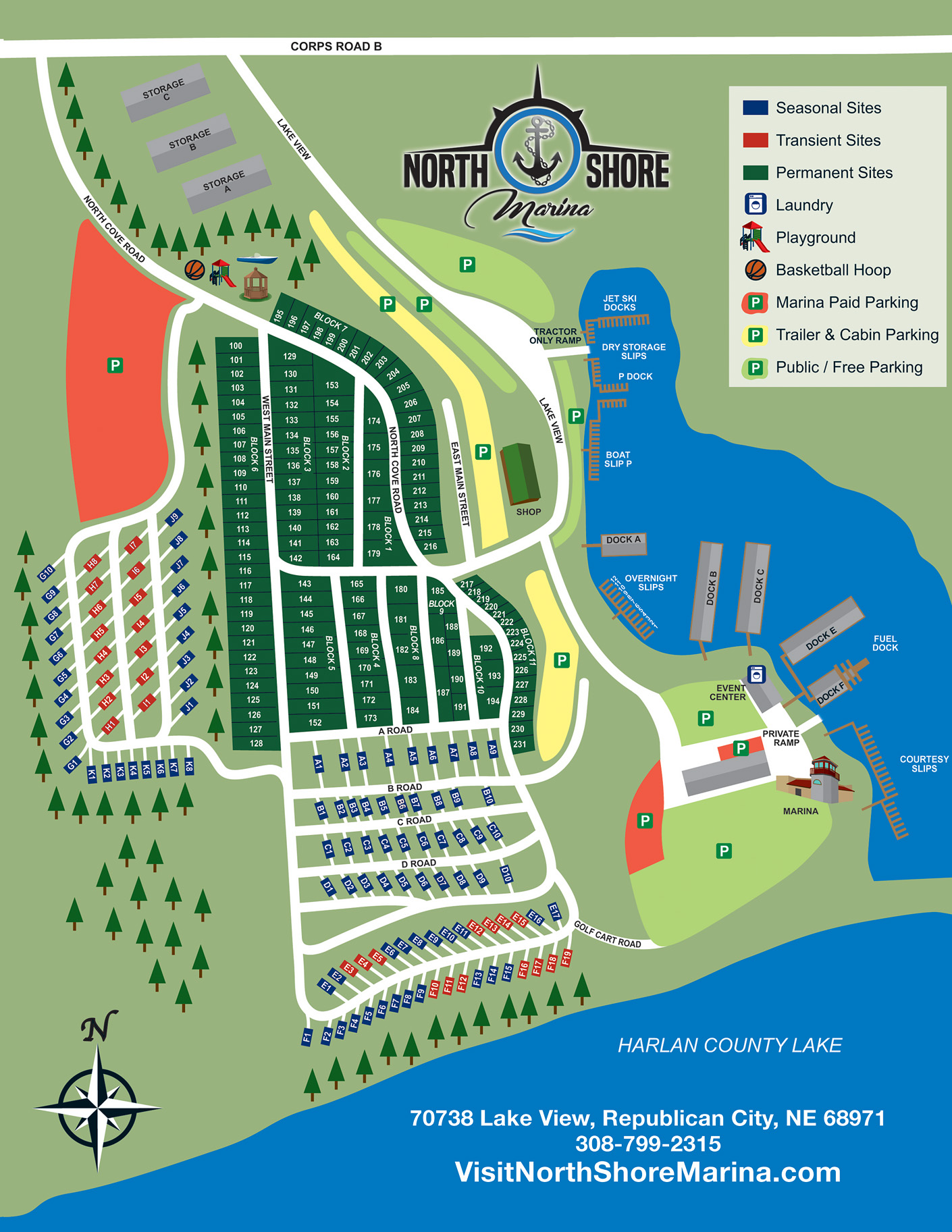
North Shore Marina & Campground in Republican City, Nebraska, operates transient and seasonal campsites along with a marina, restaurant and bar, convenience store, boat slips, fuel dock, boat launch services, pontoon rentals, and an event center.
Someone arriving to camp may be headed in a completely different direction from someone launching a boat or going to the restaurant.
Clear signs can separate those destinations:
Camping
Marina
Boat Launch →
Restaurant →
Event Center →
Trying to put every destination on one large entrance sign can create more confusion. Break the information up as guests move through the property.
The same approach works for larger campgrounds with several loops or sections.
7. Put Campground Rules Where They Matter
Guests don't need every rule presented on one oversized board at check-in.
Place information close to the area where it applies. Speed limits belong along campground roads. Pool rules belong at the pool. Pet reminders can go near a dog park or walking area.
Some rules will be specific to your location.
For example, you could create a sign that tells guests not to leave food unattended because it may attract bears or other animals.
Those rules reflect the reality of operating that particular campground.
Focus your signs on what guests actually need to know at your property. For required safety, accessibility, road, or emergency signage, check the regulations that apply to your campground before changing the design or placement.
8. Check How Your Signs Look After Dark
A sign that's easy to read at noon may disappear after sunset.
Follow the same route a late-arriving guest would take. Can you see the entrance? Is the office easy to identify? Are intersections clear? Can you read the site numbers without getting out of the vehicle?
Lighting or reflective materials may help in areas where visibility is poor.
Pay particular attention to the campground entrance, road intersections, site numbers, restrooms, and other places guests may need to find after dark.
9. Use QR Codes for Information That Changes
Not every piece of guest information needs its own permanent sign.
QR codes can be useful for information you update throughout the season, such as:
- Activity schedules
- Digital campground maps
- Local recommendations
- Restaurant or camp store hours
- Event details
- Additional campground information
- Your online booking page
You can update the information behind the QR code without replacing the physical sign.
Keep essential directions and safety information visible without requiring a phone. A guest shouldn't need to scan a code to figure out where the restroom is or how to reach their campsite.
10. Create One Sign Guests Want to Photograph
You don't need a photo opportunity at every turn.
A distinctive entrance sign, campground logo installation, scenic overlook sign, or another feature tied to the property can give guests a natural place to take a picture.
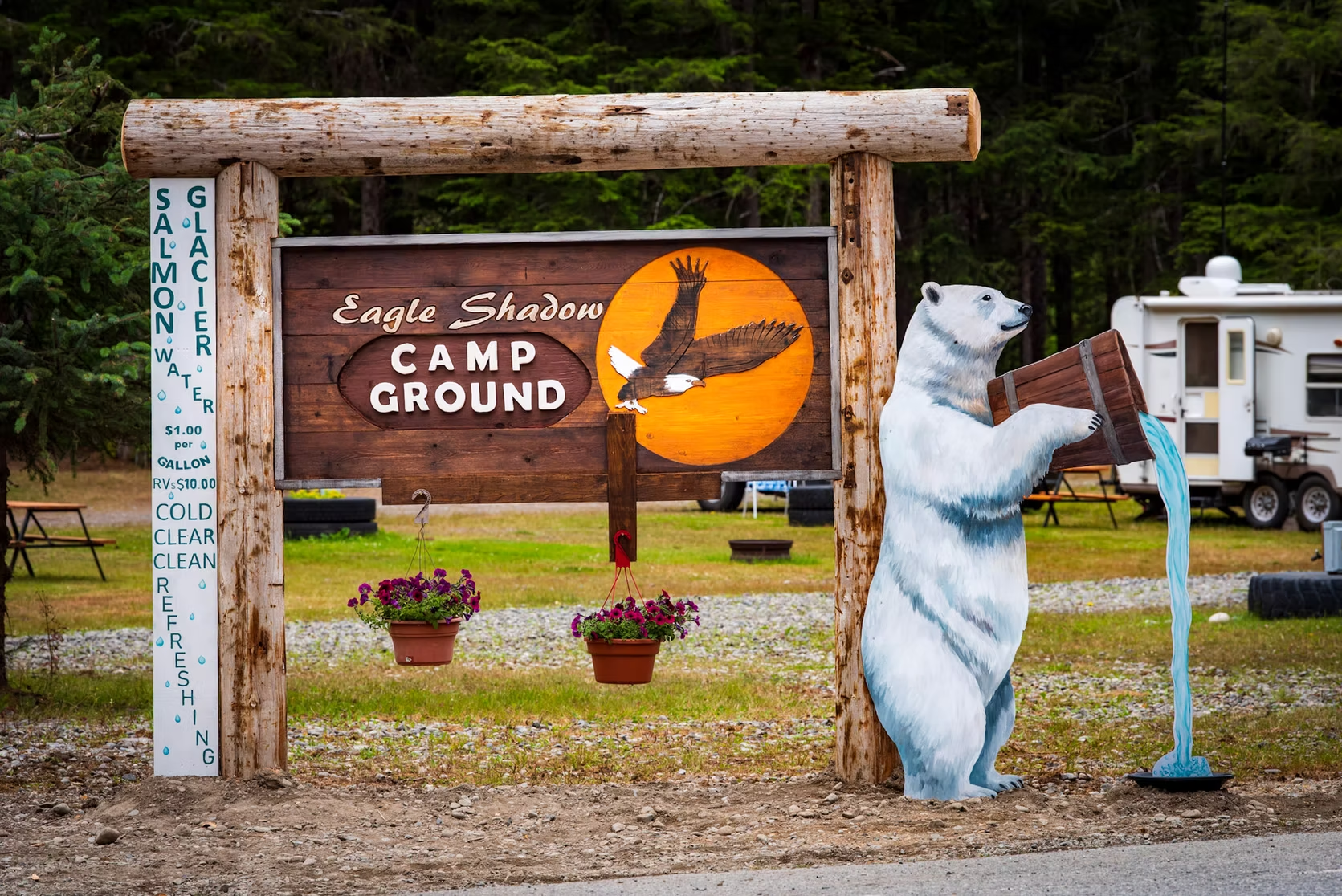
Eagle Shadow Campground in Hyder, Alaska, uses a wood entrance sign framed by large timber posts. An eagle illustration sits beside the campground name, with a large bear figure nearby.
The key is making it feel like your campground.
Eagle Shadow's entrance works because the timber, eagle graphic, and bear all fit the location. It feels specific to the property rather than added solely for social media.
Choose Campground Sign Materials Based on Where They'll Be Used
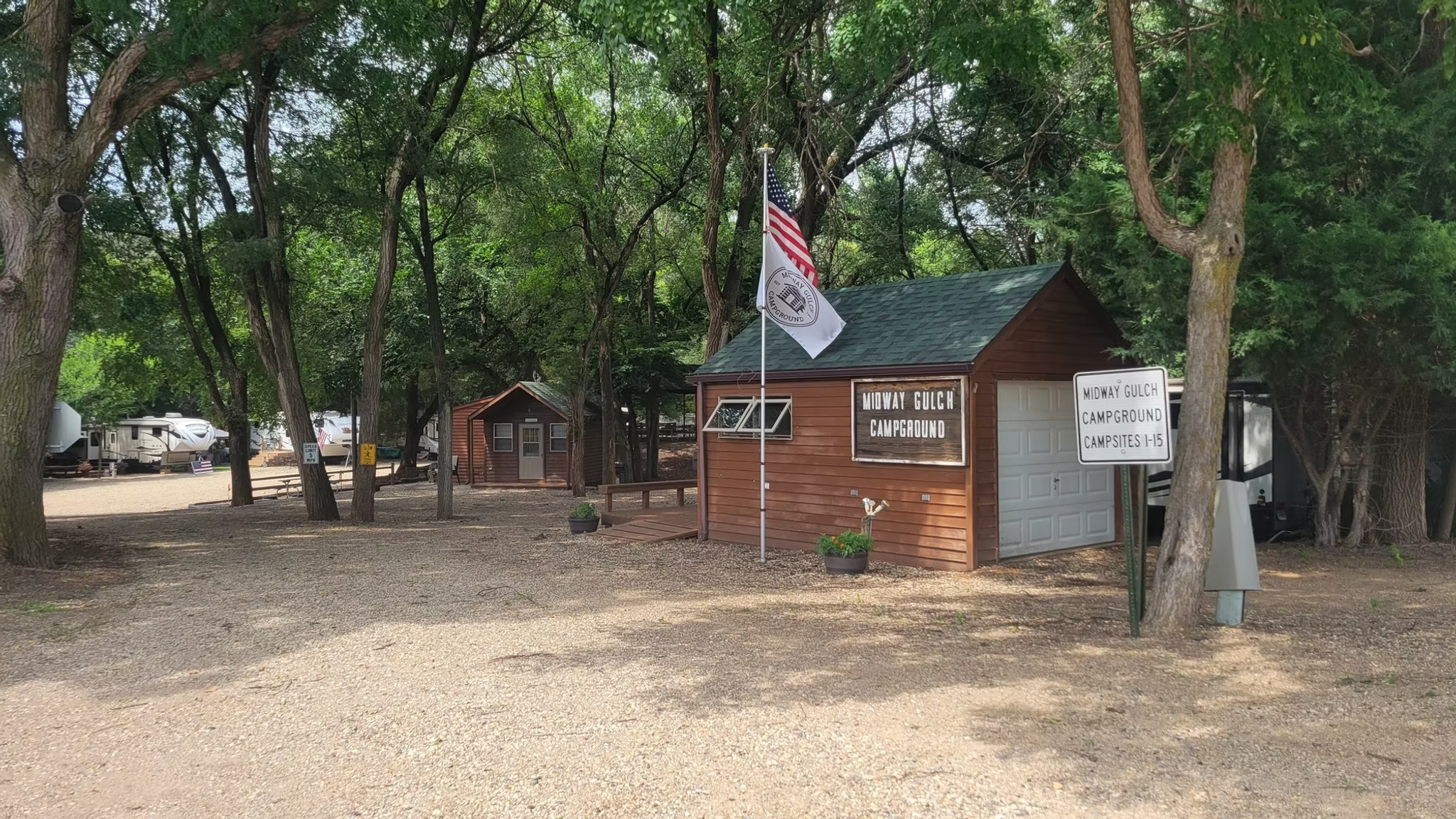
Wood can fit naturally into a rustic campground. Metal may be better suited to site numbers or directional signs that need to hold up to frequent use. Some parks use more decorative materials at the entrance and simpler signs throughout the rest of the property.
For example, Midway Gulch Campground in South Dakota used a mix of materials depending on the purpose of the sign.
Before ordering signs, think about:
- Exposure to sun, rain, snow, or salt air
- How far away the sign needs to be readable
- Visibility during the day and at night
- How easily a damaged sign can be replaced
- Vegetation that could eventually block it
- How the materials fit with nearby buildings and landscaping
There isn't one material that's right for every campground or every sign. The location and purpose should guide the decision.
Audit Your Campground Signs Before the Busy Season
It's easy to stop noticing signage problems when you see the property every day.
Start at the campground entrance and follow the route a new guest would take. Check in, find a campsite, then try to locate your main amenities without relying on what you already know about the layout.
Can you see the entrance early enough to make the turn? Is check-in obvious? Are site numbers readable from the road? Can you find the bathhouse, laundry, trash area, or other important amenities?
Try the same route after dark.
Look for faded lettering, damaged posts, outdated information, vegetation blocking signs, inconsistent site markers, or intersections where the correct direction isn't obvious.
Pay attention to the questions guests ask your staff too. If people repeatedly need directions to the same place, the signage probably needs another look.
Start With the Signs That Solve a Problem
You don't have to replace every campground sign at once.
Start where guests are most likely to get confused: finding the entrance, checking in, reaching their campsite, and locating important amenities.
Once those signs are doing their job, you can put more thought into design. Your campground's landscape, location, history, and personality will usually give you better ideas than a generic "Camping This Way" sign.
Park With Us helps campground teams manage reservations, online bookings, payments, long-term stays, and guest information in one system. There are no monthly software fees or monthly minimums for campground operators.
Book a demo to see how Park With Us could work for your park.
FAQ
Related Stories